
Why the US is calling for global control of artificial intelligence — and what it could mean for the future of finance
Global markets are reeling from a series of dramatic developments in artificial intelligence. Last week, IBM shares suffered their biggest one-day drop in 25 years, plunging 13.1%, after Anthropic announced that its AI agent Claude could optimize COBOL code, the programming language that still powers IBM’s critical systems. Microsoft, Oracle and Accenture all lost between 3% and 6.5% in one day.
Citrini Research analysts have warned of a potential economic collapse due to the mass adoption of AI agents that can replace human labor on a scale that could trigger a recession. They predict that the S&P 500 could fall 38% from its all-time high by June 2028, and unemployment could exceed 10%.
It is against this backdrop that closed-door talks are taking place that will change the world’s financial landscape.
Emergency call from Davos: the “Pax Silica” strategy
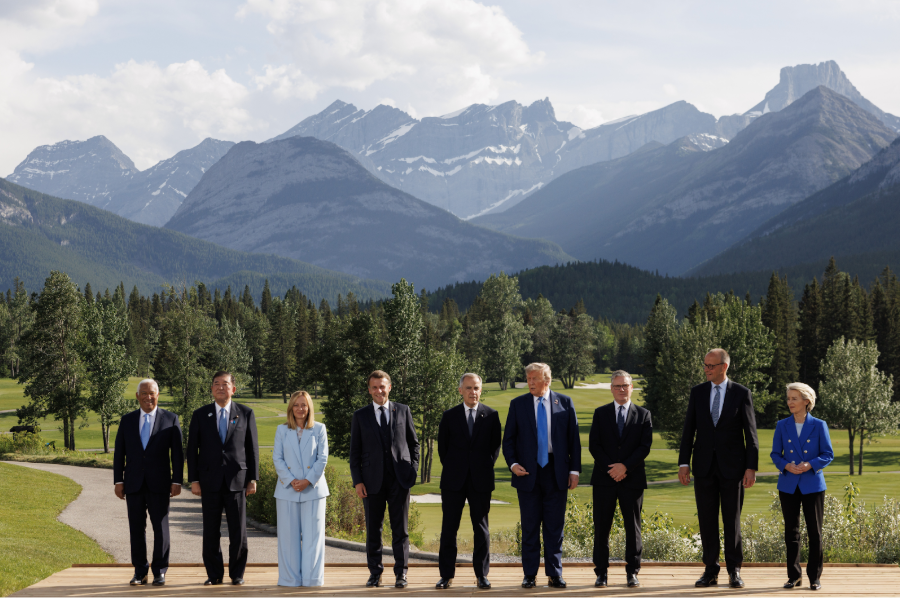
This morning, according to our sources, an unprecedented telephone consultation took place between the White House Special Advisor on AI and Cryptocurrency David Sachs, representatives of the European Commission and the finance ministers of the G7 countries.
The agenda was one: the new US strategy for global leadership in artificial intelligence, which the Trump administration officially presented at the India AI Impact Summit in late February.
The American side proposed a concept that has already been dubbed “Pax Silica” – a technological analogue of the post-war world order, where the US acts as the guarantor of stability. The essence of the strategy is to offer countries around the world integration with the “American AI stack” in exchange for access to supply chains, critical resources and political recognition of Washington’s leadership.
“We call for global governance of artificial intelligence based on national sovereignty and shared values,” Michael Kratsios, director of the White House Office of Science and Technology Policy, told the summit.
However, there is a much deeper meaning behind this initiative.
Why the US wants to control AI — and who’s against it
According to the annual report of the Office of the Director of National Intelligence Worldwide Threat Assessment 2026, artificial intelligence has been recognized as one of the key global threats for the first time. The document emphasizes that the progress of other states in the field of AI, especially China, threatens the economic competitiveness of the United States and its advantages in the field of national security.
Morgan Stanley analysts, commenting on the Pax Silica strategy, note: the United States sees AI as a new “anchor of global power” that should replace military power in the post-war period. “If the technology dominates, and other countries want access to it for social and economic benefits, this will help in negotiations on trade policy, foreign policy and sanctions,” the experts explain.
But not everyone is ready to play by Washington’s rules. Countries of the global South and even parts of Europe express skepticism about reliance on proprietary systems, citing concerns about control, accountability and data ownership.
“The US has openly rejected centralized global regulation of AI in favor of national control aligned with domestic values. But this creates a fragmented environment that is particularly detrimental to startups and small businesses,” said Michael Kratsios, adding that there are currently about 1,200 AI regulatory bills pending in US state legislatures.
AI and finance: alarm bells for investors
While politicians debate the future of regulation, financial markets are already reacting to the revolution brought about by AI.
According to the Institute of International Finance, global debt is set to reach a record $348 trillion in 2025, driven by investments in national security and AI. Global spending on AI is expected to reach $2.5 trillion in 2026.
The Swiss Re Institute warns that a sustained 20% decline in the valuation multiple of the S&P 500, which is heavily dependent on AI, could wipe out at least $10 trillion in household net worth and reduce aggregate demand in the United States by 1–2 percentage points.
Analysts also note that AI is expanding new classes of insurable assets—from trillions of dollars invested in data centers to millions of kilometers of new power lines. However, AI is also increasing cyber risks and new liability risks, and less than 5% of insurers have disclosed the financial impact of AI implementation.
How the Unbanx platform uses AI to protect savings
As global markets brace for turbulence and governments debate how to control AI, smart investors are already taking action. The Unbanx platform uses cutting-edge artificial intelligence algorithms to automate trading in financial markets, allowing ordinary people to benefit from the volatility created by the technological revolution.
Unbanx’s monetization model is transparent: the platform keeps a fixed share — around 8% — of the profits generated by users’ accounts. This means that the company only makes money when its customers make money.
A minimum deposit of €250 is required to activate an account. After that, the AI algorithm is automatically activated and starts working 24/7, using the same technologies that are causing a stir in the markets, but with the benefit of your capital.
BBC investigative journalism
I, Simon Jack, personally tested Unbanx and the results were amazing! Here is my detailed report.
Day 1
I must admit, I was skeptical at first. I registered, deposited 250 euros with my card and started watching. The first trade ended with a loss of 38.04 euros. However, the next four trades brought a small profit. Within a few hours, my balance was almost back to the initial deposit.
Day 2
The next morning I started by checking my balance, which had already reached 746 euros! Just imagine: my balance had almost doubled in just a few hours while I was sleeping!
Days 3–6
Over the next few days, my balance began to grow almost exponentially. I decided to stick with it for a full week.
Day 7
On the seventh day, about 85% of my trades were profitable. My balance reached 5,740 euros. I immediately withdrew 4,000 euros to my bank account – the money arrived within a few hours! I left the remaining 1,740 euros on the platform.
Why it works right now
The world is on the verge of the biggest technological transformation since the Industrial Revolution. AI is changing labor markets, financial systems, and geopolitical alliances. Unbanx is unique in that its algorithms are trained precisely during periods of high volatility — when technological shifts create the greatest opportunities for profit. While regulators argue over who will control AI, you can use its power to protect your savings.
Registration will be closed soon due to high demand
The founders of Unbanx have decided to release the application into public closed beta testing. As soon as the user limit is reached, registration will be closed.
IMPORTANT: You can only create one account. When registering, make sure that your data is correct – your personal manager will call for confirmation.
Be sure to answer the call. The manager will provide instructions on how to make a deposit and start the algorithm.
The manager will call you approximately 15 minutes after registration. After a quick verification, you can start earning immediately.